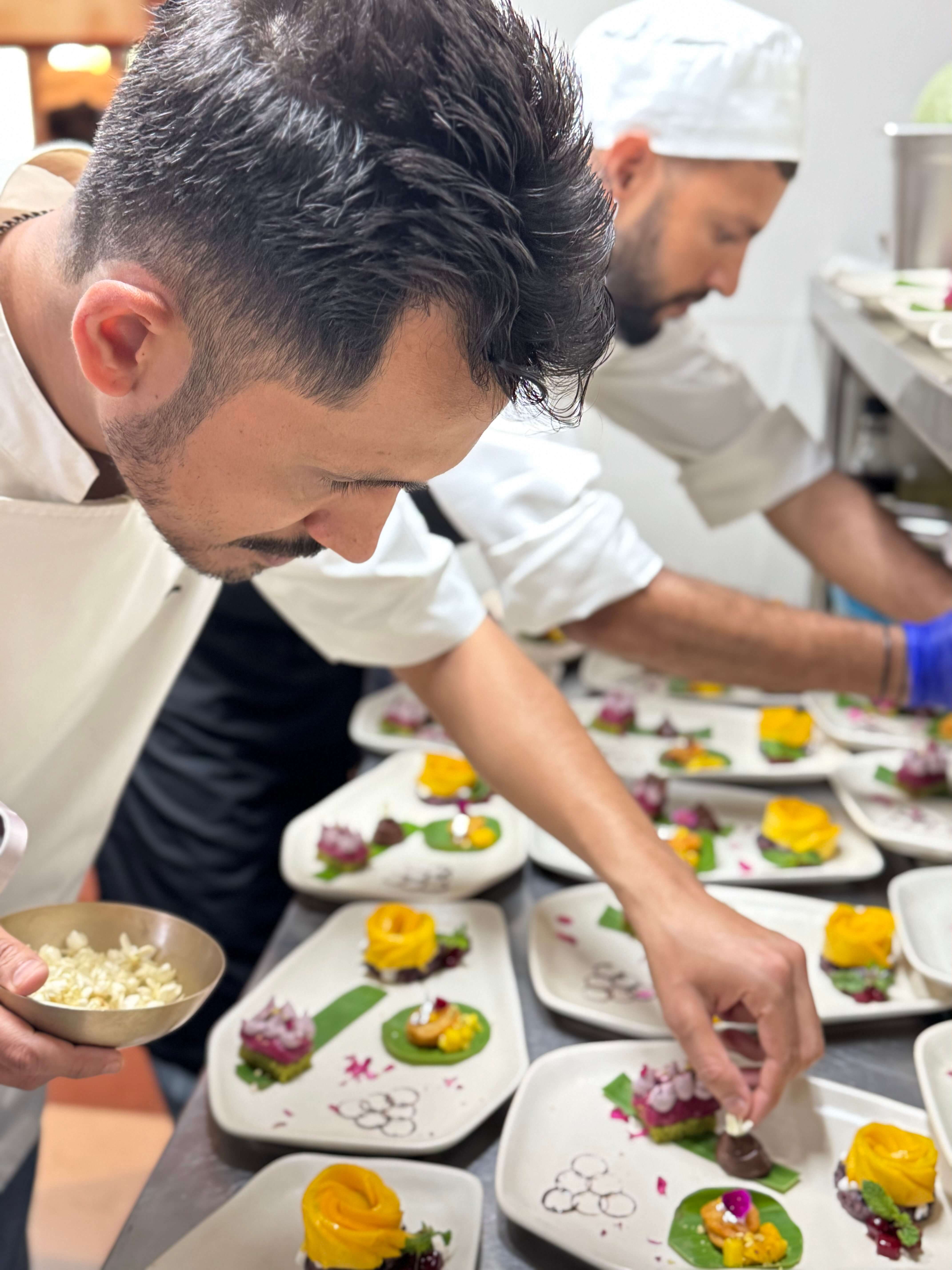
Chef Rajesh Pant is a culinary expert redefining how we experience food outside the home. As head chef at Eleved Eatery, he brings to life the brand’s commitment to clean, honest, and seasonal food rooted in India’s heritage. He believes that meals served in cafes and restaurants can be just as nourishing as those cooked at home — grounded in health, tradition, and purpose. His cooking centres on heirloom ingredients, plant-forward plates, and the philosophy that food should heal. By reviving indigenous grains, regional recipes, and slow cooking techniques, Chef Pant transforms traditional wisdom into modern meals that feed both body and soul — proving that mindful, nutritious eating belongs everywhere.
At the intersection of tradition and innovation lies Chef Rajesh Pant’s kitchen — a place where forgotten grains and native ingredients are given new life on the plate. As part of the Nutrition On My Plate campaign, which celebrates the nutritional and cultural value of heirloom foods, Chef Pant shares how chefs can be powerful changemakers in the journey toward healthier and more sustainable diets.
There’s something quietly radical about the way Chef Rajesh Pant cooks. In a world racing toward convenience, his food asks us to pause — to taste slowly, to remember deeply. As head chef at Eleved Eatery, he’s not just curating menus; he’s curating memories. His food draws from a time when cooking was sacred, when ingredients had stories, and when nourishment was both physical and emotional.
At Eleved — a wellness brand grounded in Indian heritage — Chef Pant brings to life a philosophy that food should heal. With heirloom ingredients, plant-forward plates, and a reverence for slow cooking, he transforms age-old wisdom into meals that comfort, restore, and reconnect us with who we are.
From Devprayag to Eleved: A Journey Rooted in Tradition
Growing up in a Brahmin household (a priestly and scholarly caste in Hindu society traditionally associated with rituals and vegetarian food customs), Chef Pant’s earliest memories are of weddings in his ancestral village in Devprayag — the sacred meeting point of the Alaknanda and Bhagirathi rivers, where the Ganga (also known as the Ganges, one of the most revered rivers in India) is born. From the age of five, he would assist his elders in preparing traditional village feasts using recipes passed down through generations. “There was something sacred about it,” he recalls. “The food wasn’t just about filling our stomachs — it was deeply nourishing. It was a way to heal, to connect, and to honour tradition.”
That early fascination turned into a passion. Determined to pursue cooking as a career, Chef Pant eventually crossed paths with Mr. Nitin Dixit, a visionary in wellness-based food systems. Their shared belief in the power of plant-based, heritage-rooted cuisine led to the founding of Eleved Eatery — a space where ancestral wisdom, environmental sustainability, and nutritional science come together on the plate.
The Role of Chefs in Promoting Nutritious and Sustainable Eating Habits
“Chefs hold influence — not just on menus, but in mindsets,” says Chef Pant. “We’re the bridge between the farm and the fork. By choosing to highlight heirloom, plant-based, and locally sourced foods, we send a message about what good food really means — not just taste, but nourishment and responsibility.”
For Pant, this isn’t a trend — it’s a return to the roots. He believes chefs can use their platforms to inspire trust in traditional food systems while advocating for innovation that respects the earth and what it so bountifully provides in terms of produce.
At Eleved, Chef Pant’s menu reads like a love letter to India’s forgotten landscapes — from Kasoori methi (dried fenugreek leaves) handpicked in Punjab to Joshimath rajma (a variety of red kidney beans) nourished by Himalayan snowmelt; from Gahat lentils (a high-protein legume native to Uttarakhand, a state in northern India, also known as horse gram) once simmered in stone hearths to spice blends that echo his grandmother’s kitchen.
“Take Joshimath rajma,” he says. “It’s small, deep red, buttery. Grown in Tapovan, where glacial waters feed the soil. You taste it, and it tells you something — about the mountain, the hands that harvested it, the time it took to grow.”
He speaks of Khushiram, a farmer whose family has tended rajma fields for generations. “He told me about storing beans in clay pots to last the winter — like keeping a piece of summer safe.” Pant pauses. “When I serve that rajma, I’m not just plating food. I’m plating his memory, his resilience, his pride.”
And then there’s the unexpected — like his version of deep-dish pizza made with a base of seven ancient grains, inspired by the crunchy texture of mathri (a traditional North Indian snack), topped with seasonal produce. “It’s a fusion of spirit, not just cuisine,” he smiles.
Heirloom ingredients like these add more than nutrition — they bring soul to the table. “You get distinct textures and flavours,” he adds. “A heritage rajma tastes nothing like its commercial counterpart. That uniqueness becomes a memory — one that diners can taste, remember, and carry with them.”

The Challenges of Sourcing Heirloom Ingredients
For all the beauty on the plate, the road to sourcing heirloom ingredients is often uncertain. “They grow in pockets. The quantities are small. The systems don’t support them,” Pant admits.
He recalls a promising partnership with a farming collective that unraveled due to logistics and lack of demand. “They wanted to work with us. But they needed certainty, not hope.”
Still, he persists — forging relationships with farmers, supporting cooperatives, and calling for policies that protect India’s agri-heritage. “This work is delicate,” he says. “But if we don’t hold on to it, we’ll lose it — quietly, without even noticing.”
Take Jakhiya seeds — tiny, crackling seeds used for tempering in Uttarakhand. “They grow wild, barely known outside,” Pant explains. “Now, a group of women forage and supply them to us. We’re building more than supply chains — we’re rebuilding dignity.”
A Shift in What Diners Value
“There’s a stirring,” Pant says. “You see it in people’s eyes — they want to know. What millet is this? Where is the oil from? Why does this daal feel different?”
He believes the pandemic softened us. “It made us search — for grounding, for memory, for food that touches something deeper. That’s what heirloom foods are — nourishment, yes. But also comfort. Medicine. Memory.”
For Pant, storytelling is as essential as seasoning. “When a guest asks about a dish, I don’t just describe the taste — I share the journey of the ingredient and the farmer who grew it,” he says. “It’s about creating an emotional connection to food.”
Through Chef’s Table, we bring this philosophy to life — hosting intimate, interactive sessions where diners don’t just eat; they listen, learn, and reflect. Each course becomes a conversation: about the heirloom grains from forgotten farms, the legumes nurtured in Himalayan soil, the hands that milled, harvested, and carried each ingredient.
“We want people to experience food beyond the palate,” Pant explains. “When they understand the roots of what they’re eating, they value it more — not just as a dish, but as a story, a legacy.”
If You’ve Never Tried Heirloom Foods Before…
“I would say — just taste with an open heart,” Pant smiles. “Cook maa ki daal like your grandmother did. Make sweet rice for Diwali the way your mother used to. Use that rice your ancestors relished after a long day. You’ll feel the difference — not just in flavour, but in how your body and mind responds.”
He continues, “These foods carry centuries of wisdom. Eating them is an act of remembering — who we are, where we come from, and how food can heal us.”
For Chef Pant, the kitchen is sacred ground — where biodiversity is protected, where stories are preserved, where healing begins. Through every heirloom grain and seasonal dish, he serves more than food — he serves good health and legacy.
“In the hands of our mothers and grandmothers,” he says, “food was love, protection, prayer. That’s what I want to bring back — quietly, plate by plate.”