Food has always been more than a business for me - it is a way to connect nutrition, livelihoods, sustainability, and community development. What began as an entrepreneurial journey evolved into a mission to show how local food systems can create healthier people, stronger economies, and more resilient communities.
After beginning my career in business and trading, I founded Gayatri International Trading Company in Mumbai in 2009, when awareness of organic foods was still emerging in India. As the business grew, one question shaped my journey: How can we transform nutrient-rich agricultural produce into products that create greater value for both consumers and farmers?
Rediscovering Local Food Systems in the Himalayas
This question brought me back to Uttarakhand in 2016, where I rediscovered the nutritional value of traditional crops such as millets, indigenous grains, and Himalayan herbs. I realized that many of the foods shaping tomorrow's nutritional landscape have long existed within local farming systems.
At the same time, I saw that farmers often sell valuable crops as raw commodities, capturing only a small share of their true value. This reinforced my belief that the future of food lies not just in producing more, but in creating value at the source through processing, branding, and innovation that benefits both farmers and communities.
Why Local Food Enterprises Matter
Local food enterprises can drive rural transformation by creating value close to the source. Processing local produce increases farmer incomes, generates employment, reduces food waste, strengthens rural economies, and improves access to nutritious foods. At the same time, growing demand for clean-label and nutrient-rich foods has created new opportunities for traditional ingredients such as millets and Himalayan herbs.
Micro, Small and Medium Enterprises (MSMEs) play a central role in enabling this transformation. In Uttarakhand and similar regions, MSMEs act as the backbone of rural economies by turning agricultural resources into value-added products and creating sustainable local employment. Programs such as Raising and Accelerating MSME Performance (RAMP)1 help businesses improve competitiveness, access finance, and strengthen market linkages. Similarly, the Rural Enterprise Acceleration Project (REAP)2 provides mentorship, incubation, and business development support to emerging entrepreneurs. RAMP and REAP, along with food processing and startup initiatives, are strengthening this ecosystem by improving access to finance, training, incubation, and market linkages.
However, a key gap remains in awareness and accessibility. Many entrepreneurs are still unable to fully navigate or benefit from these support systems. For me, the future of rural economies depends not only on production, but on building systems that consistently create value from that production.
The Real Challenges in Scaling Healthy Food Businesses
I believe young entrepreneurs have an extraordinary opportunity to reshape the future of food, but scaling their innovations is rarely easy. Fragmented supply chains, limited consumer awareness of traditional and nutritious foods, and the growing demand for transparency and clean-label products make the journey challenging. Building trust through consistent quality is just as important as developing an innovative product.
From my perspective, no young innovator can succeed in isolation. Meaningful impact requires an ecosystem where farmers, researchers, mentors, policymakers, investors, and consumers work together to support and scale promising ideas.
Ultimately, I believe the real challenge is not simply creating healthier food products, but helping people understand their value and making healthy, sustainable choices relevant in everyday life.
Technology, Trust, and the Future of Food
Over the years, I have often noticed how our relationship with food has changed. Growing up in India, I saw food viewed not just as nourishment, but as something deeply connected to nature, community, and wellbeing. Meals were guided by local ingredients, seasons, and a strong culture of valuing resources and avoiding waste.
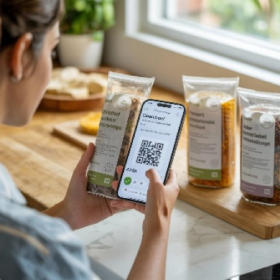
At the same time, I see technology as an important enabler in this transformation. Tools such as traceability systems, QR-based packaging, smart labelling, improved processing methods, and AI-driven insights can strengthen how food is produced and communicated. However, in my view, technology should always remain a support system for human creativity, cultural understanding, and purpose-driven innovation - not a replacement for them.
Youth as the Future of Food Innovation
Youth-led businesses will play a key role in transforming how traditional foods are perceived and consumed. Modern packaging, branding, and convenient formats can help bring nutritious traditional ingredients to wider audiences while preserving their value.
For me, storytelling is the most powerful element in this transformation. Consumers today are not just buying food - they are buying meaning, trust, and connection. When people understand where their food comes from, how it is grown, and the impact it creates for farmers and communities, it builds a much deeper relationship with the product.
I believe youth entrepreneurs are uniquely positioned to bridge this gap between rural food systems and global markets. By combining innovation with authenticity, they can ensure that traditional foods are not only preserved, but also made relevant and aspirational for the future.
Innovation, Education, and Real-World Impact
Over the years, I have met many young innovators whose ideas have reinforced my belief in youth-driven transformation. The real opportunity lies not in following trends but solving real-world problems through research, systems thinking, and practical execution.
Key areas such as food traceability, QR-based packaging, sustainable food technologies, and AI-assisted systems offer strong potential, but only when combined with real exposure to agriculture and food systems. Innovation becomes meaningful when it is grounded in lived realities rather than theory alone.
The Role of Eat Right Youth Hackathon - Uttarakhand 2026: Turning Ideas into Impact
In my view, the Eat Right Youth Hackathon - Uttarakhand 2026 (ERYH) represents a meaningful platform for enabling real transformation in food systems. It gave youth an opportunity to move beyond theoretical learning and engage with practical challenges, where traditional knowledge can be combined with modern food technologies and entrepreneurial thinking. Uttarakhand is uniquely positioned for this initiative, with its rich biodiversity and global wellness identity. By combining traditional food knowledge with innovation, such platforms can empower young people to create lasting impact and shape the future of food systems.
Rediscovering the Future
I believe many solutions to today’s food challenges already exist within our traditional systems. The opportunity lies in rediscovering this wisdom, adding value through innovation, and making it relevant for future generations. I also believe young people have a vital role to play in this transformation-bringing fresh ideas, entrepreneurial energy, and a willingness to reimagine traditional knowledge for a changing world. For me, this journey is about empowering farming communities, inspiring the next generation of food innovators, and building healthier, more sustainable food systems by bringing together tradition, science, and entrepreneurship. The future of food is not new -- it is rediscovered.