
What is the Sampurna Grand Challenge ?
Sampurna 2026 is a multi-sectoral platform co-created by GAIN, Nutrition Connect, Thinkthrough Consulting and ABWCI, under the leadership of the Government of Karnataka. It is designed to provide a comprehensive implementation architecture to scale innovative solutions across Karnataka's agriculture and horticulture value chains. The platform connects policy, public systems, markets, capital, innovators, and producer institutions to support the deployment of solutions that improve farmer incomes, reduce post-harvest inefficiencies/loss, and strengthen nutrition-sensitive and climate-resilient food systems.
Sampurna — meaning whole or complete — reflects the platform's ambition: to bring together all stakeholders and address every aspect of reducing food loss and strengthening food systems in Karnataka.
Why the challenge ?
India loses an estimated ₹92,000 crore worth of food annually, with post-harvest losses accounting for a significant share, particularly in fruits and vegetables, according to data from the Indian Council of Agricultural Research and the Food Corporation of India. Nearly one-third of food produced globally is lost before it reaches consumers, with consequences spanning farmer livelihoods, food affordability, nutrition security and climate impact.
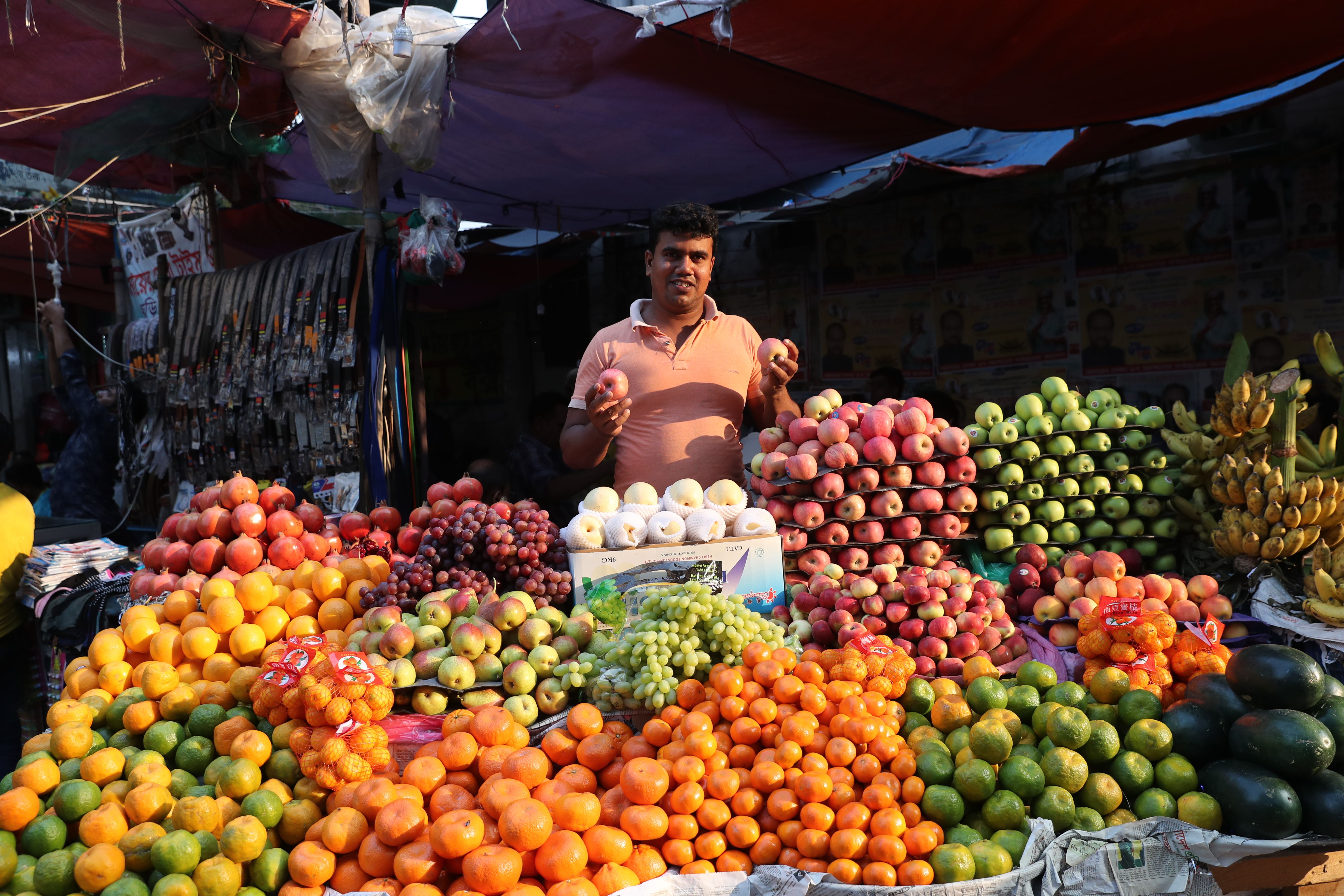
Karnataka, one of India’s most important agri-horticulture states, accounts for nearly 9.6 per cent of the country’s horticultural area and about 7.2 per cent of national horticultural production. Horticulture contributes close to 30 per cent of the state’s agricultural Gross Value Added, as per the Karnataka Economic Survey 21-22, underscoring the sector’s central role in rural incomes and food supply. However, the state’s diverse agro-climatic zones and high production volumes also pose challenges related to harvesting, storage, logistics and market integration—particularly during peak seasons.
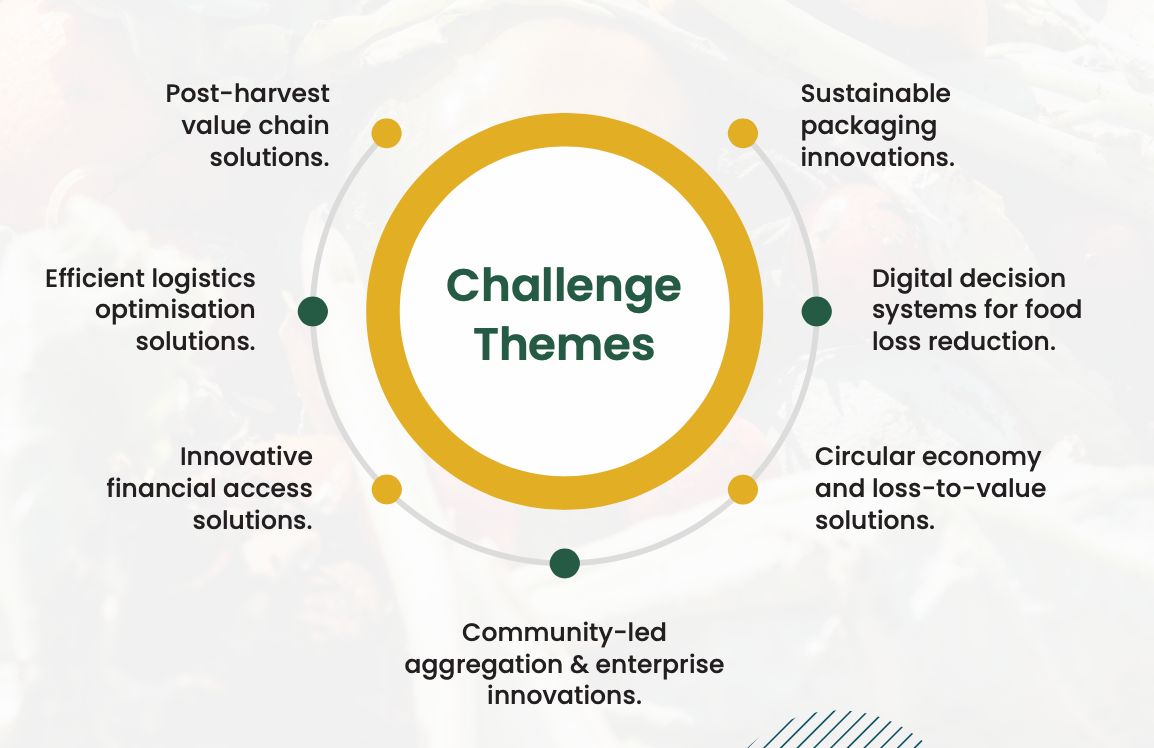
Thematic Areas of the Innovation Challenge :
Objectives of the Sampurna Grand Challenge :
The Sampurna Grand Challenge aims to identify and advance locally relevant, market-ready innovations that reduce post-harvest food loss across Karnataka’s value chains. Through targeted mentorship and partnerships with buyers, investors, and government stakeholders, the Challenge strengthens technical and business readiness while building a scalable pipeline of solutions and enabling their integration into the state’s agricultural and market systems.
- Identify practical, market-ready solutions to prevent food loss.
- Enhance the technical and business readiness of innovators through targeted mentorship.
- Facilitate meaningful partnerships with buyers, investors, and government stakeholders.
- Build a coordinated pathway for integrating viable innovations into Karnataka’s market systems.
Eligibility criteria
The Grand Challenge is open to individuals and organizations, including but not limited to startups, MSMEs, Farmer Producer Organizations (FPOs), and social enterprises, working to reduce post-harvest losses across the farm-to-market value chain. Eligible solutions should be beyond the idea stage, ranging from prototype to implementation, and demonstrate clear potential for scale and investment. Innovators operating at any stage of the value chain, from harvesting, storage, and processing to logistics, distribution, and market access, are encouraged to apply. Women- and youth-led (18+) ventures are strongly encouraged.
Incentives for Winners :
- Financial awards as seed-funding support for winners
- Visibility and recognition
- Mentorship by domain experts
- Felicitation at state-level finale` ceremony
- Continued learning and networking opportunities
FAQ
About the Challenge
What is this challenge about?
The Sampurna Grand Challenge 2026 is an innovation initiative launched by the Government of Karnataka in partnership with GAIN (Global Alliance for Improved Nutrition), Nutrition Connect, Thinkthrough Consulting (TTC), and ABWCI. It is a platform designed to spotlight and scale innovative, home-grown solutions that tackle food loss across Karnataka's horticulture value chains, by engaging startups, entrepreneurs, academic institutions, FPOs, and agri-enterprises. The initiative provides these innovators with a structured competition process, expert mentorship, access to a curated Deal Room with buyers, investors, and government stakeholders, and opportunities for post-challenge piloting and scale-up in collaboration with state departments and development partners. Building successful innovation challenges run by GAIN globally, the challenge fosters multi-sectoral collaboration by convening government, private sector, academia, and civil society to collectively advance Karnataka's vision for sustainable, resilient food systems, positioning the state as a frontrunner in driving transformative food system innovation.
How will participating in this challenge benefit my organisation?
The challenge offers enhanced visibility for your innovation, strengthened cross-sectoral partnerships, and access to an ecosystem that brings together government, industry, FPOs, and capital, creating a meaningful pathway from innovation to impact at scale within Karnataka.
Participating organizations stand to gain across multiple dimensions. Finalists will be connected to a curated Deal Room enabling meetings with buyers, investors, and market linkage partners. Winners will receive recognition and support for post-event piloting and scale-up in collaboration with state departments, private sector, and development partners.
Which crops are the focus of this challenge?
The challenge places special emphasis on seven priority crops: Onion, Mango, Banana, Tomato, Grapes, Pomegranate, and Pineapple. Solutions applicable to other crops are also welcome, provided they demonstrate clear potential for replication or adaptation across these seven priority crops.
Is there an application fee to participate?
No. There is absolutely no application fee to participate in the Sampurna Grand Challenge 2026. The application process is entirely free of charge for all eligible applicants.
Eligibility
Who is eligible to apply?
The challenge is open to any legally registered organisation working on innovative solutions relevant to post-harvest food loss in Karnataka's horticulture sector. This includes startups and agri-tech companies, academic and research institutions, technology innovators and product developers, Farmer Producer Organisations (FPOs) and agri-enterprises, social enterprises and ecosystem organisations working in agriculture, food systems, and climate innovation, cooperatives, SHGs, community enterprises, and others. Applications are open to organisations at any stage of development; from early-stage innovators and research teams to scaling enterprises. Women-led organisations and youth innovators are strongly encouraged to apply.
Does my organisation need to be based in Karnataka to apply?
No. Your organisation does not need to be headquartered in Karnataka. However, your solution must be deployable and scalable within Karnataka, and you should be able to demonstrate clear intent and capacity to operate in the state. Solutions that are already active in Karnataka, or that can be adapted to Karnataka's horticulture context, are particularly encouraged.
What are the basic eligibility conditions common across all categories?
Across all categories, applicants must: (1) be applying as a legally registered organisation; (2) have a solution that is already tested or ready for market deployment in Karnataka; (3) have a solution directly relevant to the specific challenge category they are applying under; and (4) have audited financial statements for the last 2 years, or bank statements for MSMEs and FPOs.
My organisation is at an early stage — can we still apply?
Yes. The challenge invites organisations at any stage of development. What matters is whether your solution has been tested or is ready for market deployment. If your solution is still very early in research or concept stage (pre-prototype or purely conceptual), it may not yet be ready for this challenge. However, if you have a working model, or a deployable product, you are encouraged to apply regardless of your organisation's age or size.
Can individual farmers or farmer groups apply?
Yes, particularly for Category 4 (Community-Led Aggregation & Enterprise Innovations). Individual farmers, farmer groups, cooperatives, SHGs, producer collectives, and community trusts are explicitly welcomed as applicants under that category. For other categories, a legally registered organisation structure is required.
Can foreign organisations apply?
Yes, but with an important condition. Foreign organisations must have a registered Indian legal entity and must be able to demonstrate that their solution is already operational and scalable in India. If your organisation is a foreign entity currently exploring entry into the Indian market and does not yet have an established Indian presence or demonstrated India-scale deployment, you would not qualify for this challenge at this stage.
We are an FPO or MSME without audited financial statements — can we still apply?
Yes. The financial documentation requirement recognises that MSMEs and FPOs may not have audited financial statements. For such organisations, bank statements for the last 2 years are accepted as an alternative. You must upload these as part of your application. The Eligibility Checker asks whether you have either audited financial statements or bank statements; if you have bank statements, you should answer "Yes".
The Application Form
What does the application form consist of?
Each category has its own application form, structured into six parts: Part A (Organisation Details), Part B (Solution Innovation & Technical Feasibility), Part C (Scalability & Market Viability), Part D (Cross-Crop Replicability), Part E (Execution Capacity & Vision for Karnataka), and Part F (Mandatory Compliance Declarations). All forms also include an Eligibility Checker section at the beginning that must be completed before the main form becomes accessible.
What documents do I need to upload as part of the application?
Mandatory uploads are: (1) your registration certificate or document specifying the date and type of registration; and (2) your audited financial statements for the last 2 years, or bank statements for MSMEs and FPOs. Beyond these, most evidence uploads across other questions are optional but strongly encouraged — they strengthen your application with real data, case studies, pilot results, or technical documentation.
What language is the application form available in?
The application form is available in both English and Kannada.
What language should I use in the application?
Applications can be submitted in English or Kannada. Both languages are fully supported.
Are there word limits on the answers?
Yes. Each question specifies a maximum word limit (e.g. Max 200 words, Max 300 words). Please respect these limits as they ensure your responses remain focused and allow for consistent evaluation across all applications.
My solution works for crops other than the seven priority crops — can I still apply?
Yes. While the programme places special emphasis on Onion, Mango, Banana, Tomato, Grapes, Pomegranate, and Pineapple, solutions applicable to other crops are equally welcome provided they demonstrate clear potential for replication or adaptation across the seven priority crops. In the replicability section (Part D), you will be asked to indicate which of the seven priority crops your solution can be adapted for, and what changes would be required per crop.
Can I edit my application after submission?
Applications cannot be edited after formal submission. Please review all sections carefully before clicking the final "Submit Formal Application" button. Use the tab navigation to move between sections and verify your responses. If you have already submitted and believe there is a critical error, please contact the challenge team immediately through the official challenge communication channels.
When is the last date to submit my application?
The last date to submit your application is 31st May 2026.
Assessment & Selection
Will shortlisted applicants receive any support before the final evaluation?
Yes. Organisations shortlisted as semifinalists will receive capacity-building support. This is designed to help shortlisted organisations strengthen their pitches and implementation plans ahead of the final selection process.
What happens after selection — what do winners receive?
Details of the specific support, funding, or partnership benefits provided to selected winners will be communicated through the official challenge channels and brochure. The challenge is designed as a platform to help solutions scale — connecting winners with government support, implementation pathways, and investor/partner networks, including through a curated Deal Room with buyers, investors, and market linkage partners. The focus is on enabling real deployment and scaling within Karnataka's horticulture value chains.
Challenge Categories
What are the seven challenge categories, and how do I know which one my solution fits?
There are seven categories, each targeting a distinct intervention point in the post-harvest value chain. Understanding the core focus of each will help you identify the right fit:
- Category 1 — Post-Harvest Value Chain Solutions: For solutions that handle, sort, grade, cool, or process produce immediately after harvest; on-farm or near-farm. Think packhouses, low-cost cold storage, ripening management, mobile processing equipment, and on-farm grading tools. If your solution prevents spoilage at the farm-gate stage, this is your category.
- Category 2 — Sustainable Packaging Innovations: For solutions centred on packaging materials, containers, or systems that protect produce quality during handling, storage, or transport. This includes biodegradable packaging, reusable crates, modified-atmosphere packaging (MAP), and smart freshness indicators. If your innovation is about how produce is packed, this is your category.
- Category 3 — Efficient Logistics Optimisation Solutions: For solutions that improve the movement of produce from farm to market; transport scheduling, load matching, last-mile cooling, shared cold-chain services, route optimisation, and fleet tracking. If your solution reduces transit time, delays, or spoilage during transport, this is your category.
- Category 4 — Community-Led Aggregation & Enterprise Innovations: For solutions that enable farmers to aggregate, coordinate, or market collectively; through FPO models, village collection centres, collective branding, or women-led community enterprises. If your solution builds collective market power for smallholders, this is your category.
- Category 5 — Innovative Financial Access Solutions for FPOs & Agri-Enterprises: For solutions that provide financial services; credit, working capital, warehouse receipt finance, digital lending, insurance-linked products; specifically tailored to FPOs and agri-enterprises engaged in post-harvest activities. If your solution addresses the finance gap that prevents adoption of loss-reducing technologies, this is your category.
- Category 6 — Digital Decision Systems for Food Loss Reduction: For solutions that integrate data across multiple stages of the value chain (farm, storage, logistics, markets) and enable better coordinated decision-making by multiple actors. Think multi-stakeholder platforms, predictive analytics, end-to-end traceability, and harvest-to-market coordination systems. Standalone single-function tools are generally a better fit for Category 3 unless they drive actionable decisions across multiple actors.
- Category 7 — Circular Economy & Loss-to-Value Solutions: For solutions that create new products or value from surplus, off-grade, or rejected produce that cannot enter primary markets. Think dehydration units, juice and puree processing, biogas from organic waste, composting, and by-product extraction. If your solution converts food loss into economic value, this is your category.
Apply under the category that best reflects your PRIMARY intervention. Many solutions naturally span more than one category — that is by design. Choose where the core value of your solution is concentrated.
Our organisation has several solutions across different categories — can we still apply?
Yes. If your organisation has multiple distinct solutions that genuinely address different categories, you may submit a separate application for each category. Each application must represent a genuinely distinct solution meeting that category's eligibility criteria. One solution per application, one application per category.
My solution overlaps with more than one category — which should I apply under?
Please refer to Question 22 above, which clearly elaborates the definition and boundaries of each category. Apply under the category that best represents your primary intervention, where the core value of your solution lies. The challenge is designed recognising that solutions can span multiple areas.
I work with FPOs on market linkages — which category fits me?
This depends on your primary intervention. If you help FPOs access finance to invest in post-harvest operations, apply to Category 5. If you build community aggregation hubs or collective marketing models, apply to Category 4. If you provide digital tools to help FPOs make better decisions, apply to Category 6. If you provide logistics services to FPOs, apply to Category 3. Refer to Question 22 for full category definitions to identify the best fit.
For any queries not addressed in this FAQ, please reach out to the Sampurna Grand Challenge team through the official challenge communication channels. This FAQ is intended as a guide and does not supersede the official challenge guidelines and terms.
Hosts
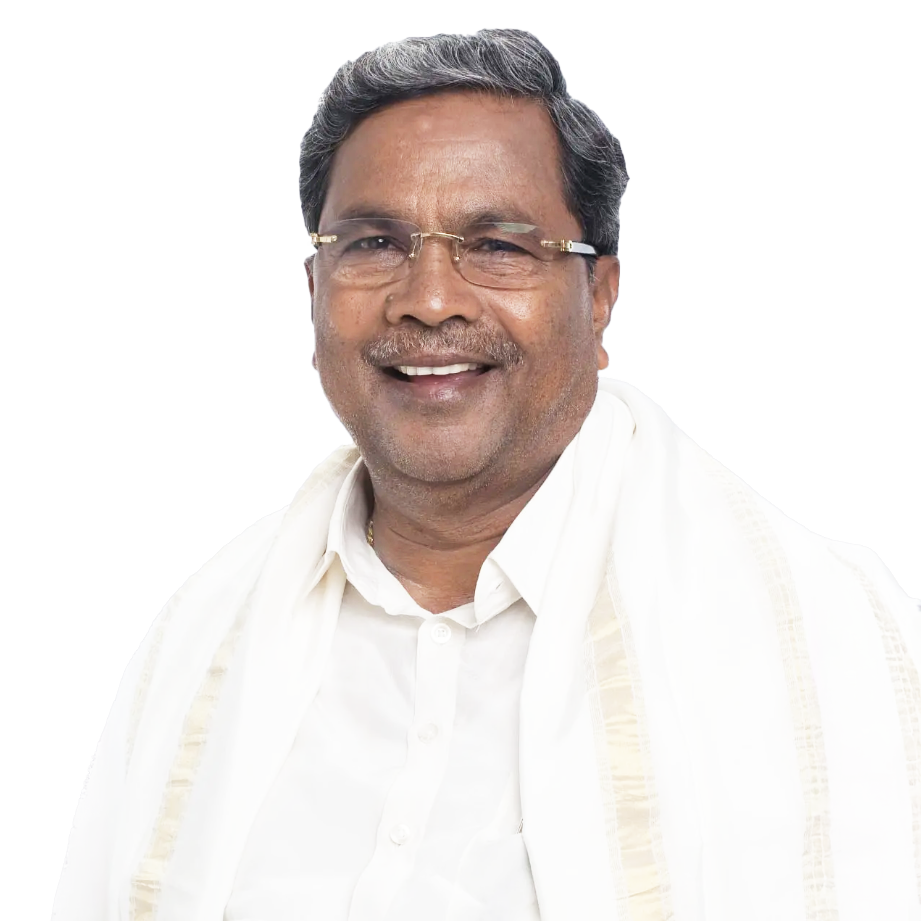
Shri Siddaramaiah
Hon'ble Chief Minister

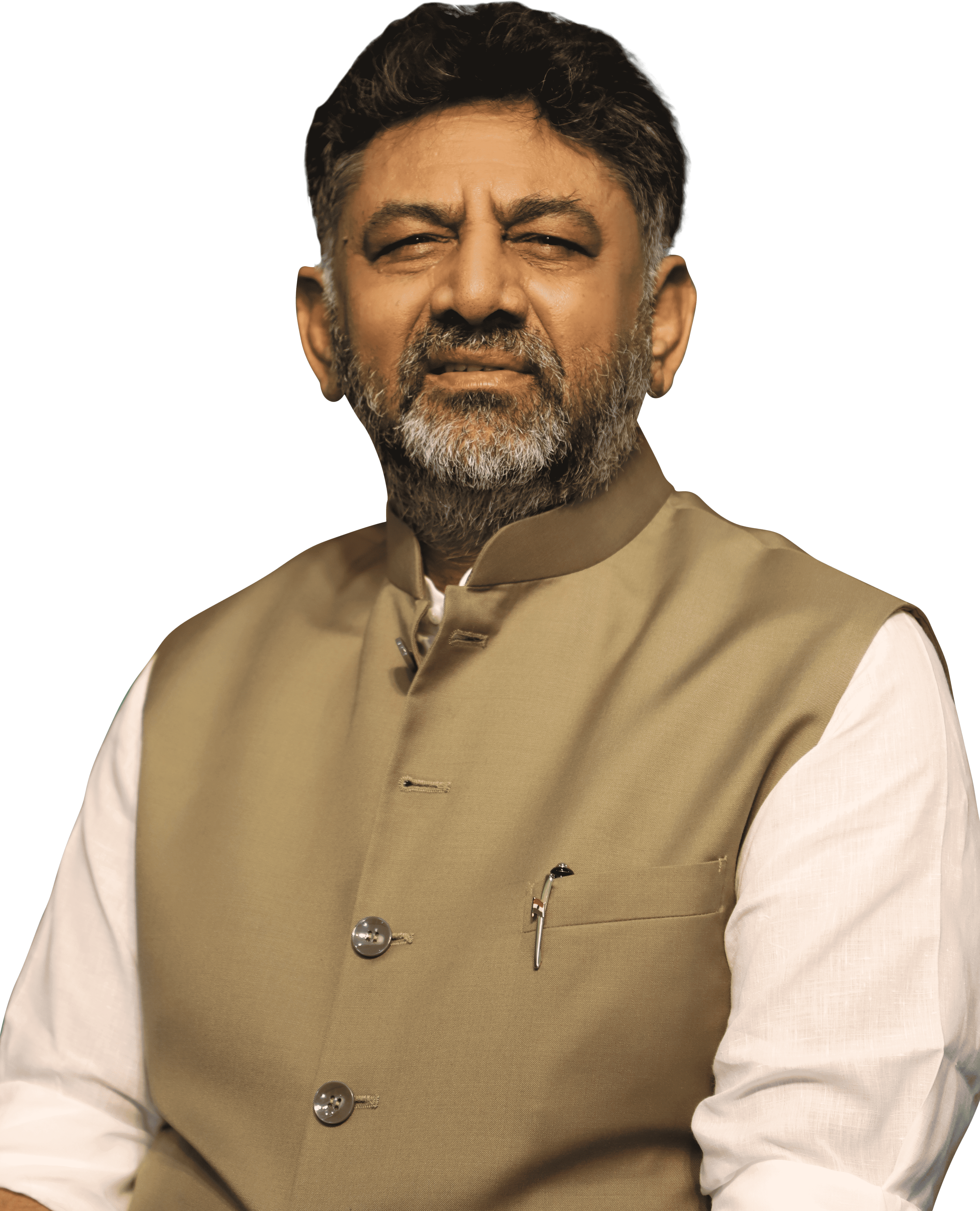
Shri D.K. Shivakumar
Hon'ble Deputy Chief Minister
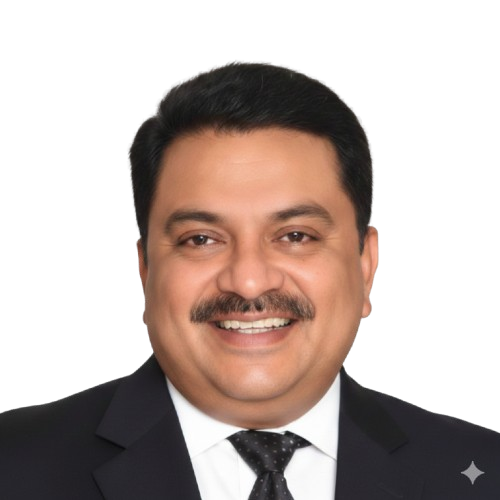
Shri S.S. Mallikarjun
Hon'ble Minister of Mines
& Geology and Horticulture
Core Partners

Media Partner

Event Partner