Featuring insights from Bärbel Weiligmann, Global Workforce Nutrition Lead, GAIN
In a world where only 44% of newborns are breastfed within the first hour of birth and just 48% of infants under six months are exclusively breastfed, sustainable systems to support breastfeeding are urgently needed (WHO & UNICEF, 2023). As the theme of the World Breastfeeding Week 2025 —“Prioritise Breastfeeding: Create Sustainable Support Systems”—reminds us, this is not just a health issue. It’s a systemic challenge and opportunity across sectors, for governments and employers to communities and food systems alike.
In this feature, we speak to Dr. Bärbel Weiligmann, who leads GAIN’s Global Workforce Nutrition efforts, to unpack how policy, infrastructure, and inclusive design can drive sustainable change for breastfeeding at the workplace and beyond.
From Principles to Practice: What Makes a Supportive Workplace?
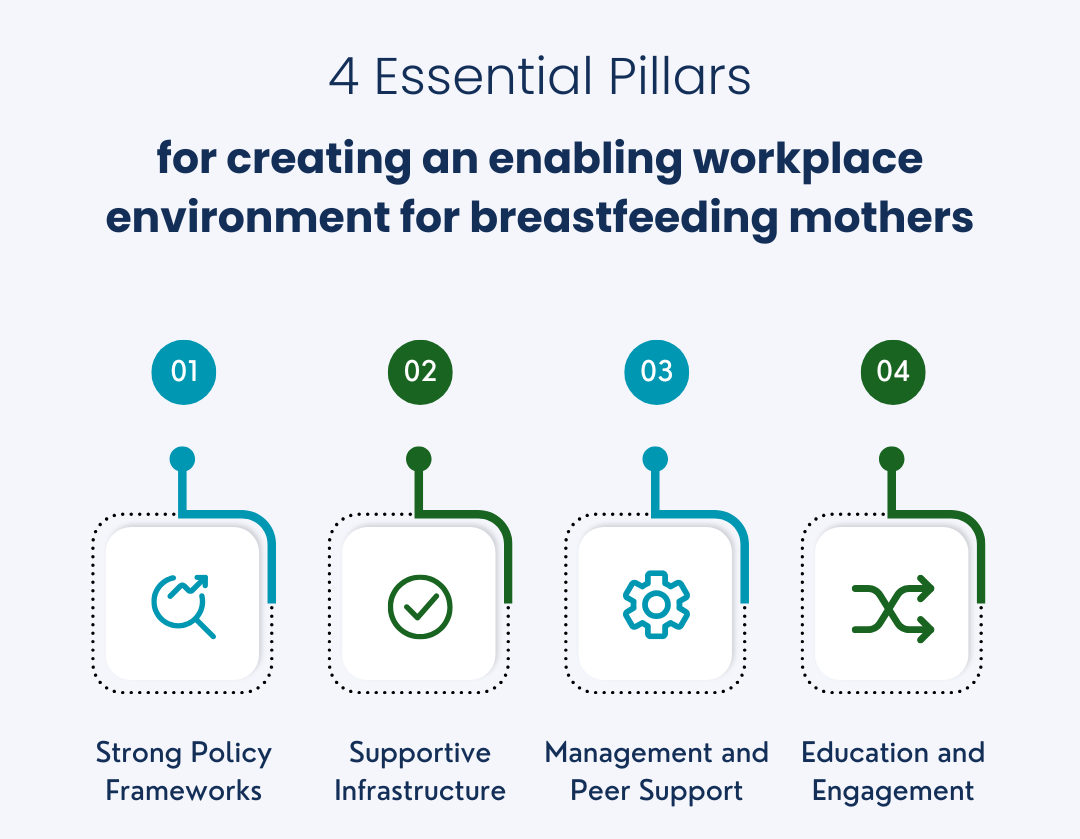
Bärbel outlines four essential pillars for creating an enabling workplace environment for breastfeeding mothers:
- Strong Policy Frameworks
Alignment with national maternity protection laws: including paid maternity leave, breastfeeding breaks, and workplace protections which is the foundation. - Supportive Infrastructure
Safe, private, and accessible lactation rooms near workspaces are critical to normalize breastfeeding at work. - Management and Peer Support
Workplace culture matters. Leadership buy-in and peer encouragement ensure breastfeeding is seen as a shared, inclusive priority. - Education and Engagement
Awareness campaigns and regular communication help normalize breastfeeding and encourage mothers to continue even after formal breaks end.
GAIN’s Workforce Nutrition Scorecard, developed with the Consumer Goods Forum, includes breastfeeding as a key component. As Bärbel Weiligmann explains, a major milestone was integrating the Scorecard into the visibility framework of over 1,300 companies assessed by the Access to Nutrition Initiative (ATNI) and the World Benchmarking Alliance (WBA). “Companies now get the question—are you providing breastfeeding support?” she notes. “It brings visibility to a topic often left in the margins of investing in Human Resource (HR), but much needed for transforming it into a business issue, not just a maternal one.”
Innovation on the Ground: A Case from Côte d’Ivoire
One powerful example Bärbel cites is from a rubber production unit in Côte d’Ivoire in West Africa with Olam Agri. A simple act of empathy changed everything for working mothers at the plant. Many women felt uneasy using breast pumps, and without an alternative, continuing to breastfeed seemed impossible. Seeing this, procurement officer N’takpe came up with a solution: arranging daily transport for babies and their caregivers from nearby villages to the workplace.
Each day, during their breaks, mothers could cradle their children in their arms and feed them directly, thus restoring not just nourishment, but connection.
“It may be a small intervention,” Bärbel reflects, “but it speaks volumes about innovation, empathy, and commitment. It shows that even without grand facilities, human understanding can create a bridge between work and motherhood.”
Why Should Employers Care?
Beyond the moral imperative, the business case for breastfeeding is strong especially in low- and middle-income countries:
- Reduced Absenteeism: Breastfed babies tend to fall sick less often, reducing time off for caregivers.
- Improved Mental Health: Mothers who can breastfeed report lower stress and stronger workplace engagement.
- Increased Retention and Morale: Supportive policies improve loyalty and reduce turnover, particularly among women rising to leadership.
"And it’s low-cost," Bärbel emphasizes. “Providing time, a room, and a bit of empathy can go a long way.”
“We firmly believe that babies who are well nourished through breastfeeding will be healthy, and if the children are very healthy, the mothers can be fulfilled and work better without worry,” says N’takpe.
Research Gaps and the Road Ahead
Dr. Bärbel Weiligmann says, “There’s already evidence showing that every $1 invested in workplace breastfeeding support can return to $3. But more comparable, localized data could make the case even stronger.”
The Power of Policy and Consciousness
When asked about one key action that governments or employers can take, Bärbel is clear: "Extend paid maternity leave to six months." WHO recommends six months of exclusive breastfeeding, but most national policies fall short, including in high-income countries.
GAIN and partner’s advocacy has helped make breastfeeding a visible part of workforce nutrition, breaking it out of HR silos and into the broader business conversation. “It’s about restoring consciousness,” she says. “We’ve forgotten how to nourish ourselves during work, and it starts at birth.”
Final Word: Investing in the Next Generation
Breastfeeding is not just a health choice. It’s an investment in future generations. It strengthens immunity, improves cognitive development, and fosters critical bonding in early childhood. As Bärbel notes, “Our grandparents had fewer food choices but better food consciousness. It’s time we reclaim that, starting with the youngest among us.”
In August 2025, Nutrition Connect at GAIN, with partners, is celebrating World Breastfeeding Month under the theme “Prioritise Breastfeeding: Create Sustainable Support Systems.” The campaign underscores the urgent need for stronger policies, workplace support, and community-driven solutions. Through workforce nutrition initiatives, GAIN and partners are helping employers, governments, and communities integrate breastfeeding-friendly policies, improve infrastructure like lactation rooms, and foster supportive peer networks. By spotlighting innovations from workplaces and grassroots programs worldwide, this celebration amplifies one message: investing in breastfeeding is investing in healthier generations and stronger economies.
Related Reading