A silent crisis is threatening the health and future of Rwanda’s mothers and children: micronutrient deficiencies, often referred to as hidden hunger. These invisible shortages of essential nutrients and minerals undermine the well-being of families, particularly women of reproductive age (WRA), pregnant and lactating mothers, and children under five. According to the 2019–20 Rwanda Demographic and Health Survey (RDHS), 18.9% of non-pregnant women and 24.6% of pregnant women are anaemic, while 22% of children under five also suffer from anaemia. The implications of these deficiencies are profound: maternal complications that put mothers at risk during childbirth, babies born with low birth weight, and children with impaired immunity who face stunting, poor cognitive development and diminished learning potential.
Rwanda’s Bold Fortification Steps
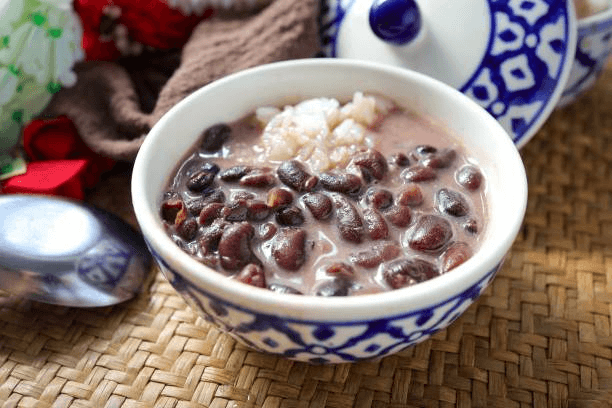
A bowl of white rice and red beans.
At the same time, a quiet revolution is unfolding on every plate. Food fortification, which involves adding essential vitamins and minerals to widely consumed staple foods, is proving to be a cost-effective and scalable strategy for addressing micronutrient deficiencies. Rwanda has made notable strides by mandating the iodisation of salt and the fortification of cooking oil with vitamin A. These targeted interventions have been critical in reducing iodine deficiency disorders and supporting maternal and child health, offering promise for improved public health.
Across sub-Saharan Africa, food fortification programmes have also shown significant promise. In Tanzania, just a year after mandatory folic acid fortification was implemented, folate deficiency among WRA dropped by 25%. Similar successes have been observed in Ghana, Cameroon, and South Africa, where fortified flour and oil have improved iron, zinc, and folate status and helped reduce anaemia and neural tube defects.
Beyond health, the economic case for large-scale food fortification is compelling. For every $1 invested in food fortification, there are up to $27 in economic returns. Meaning food fortification not only prevents disease but also promotes development, resilience, and human capital.
Rwanda’s Opportunity to Scale
Still, gaps persist in the implementation of large-scale food fortification. Many Rwandan households, especially in rural areas, rely on locally milled maize and wheat, which often fail to meet formal fortification standards. Local millers, particularly small- and medium-sized enterprises (SMEs), face challenges including limited resources, expensive equipment, and a failure to comply with national fortification regulations. For many consumers, fortified products can be both costly and unfamiliar.
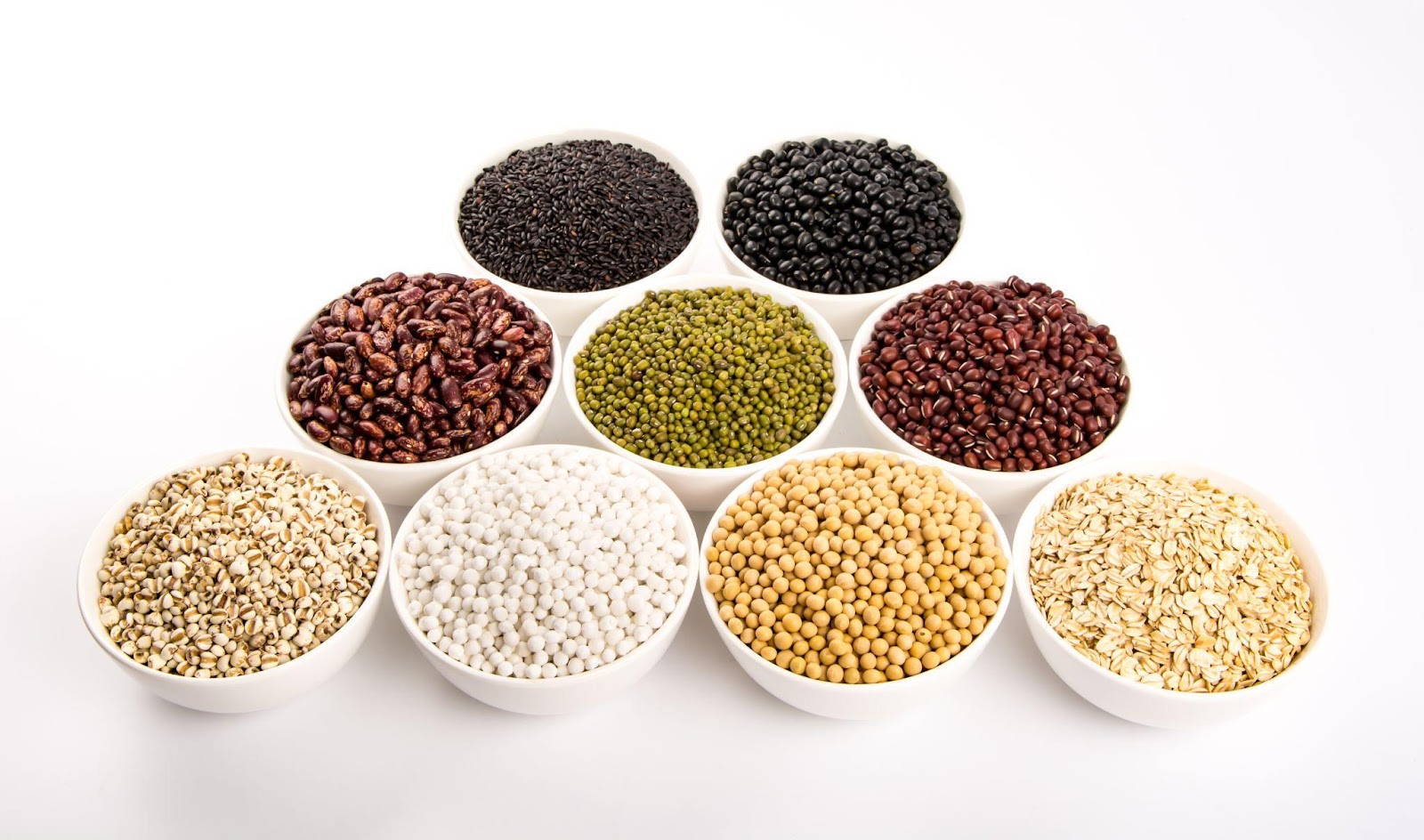
An assortment of pulses.
To close these gaps, Rwanda introduced a complementary strategy in 2024: Multiple Micronutrient Supplementation (MMS) for pregnant women in selected districts. MMS offers 15 essential micronutrients, including iron, folic acid, iodine, and vitamin A, providing broader protection than the traditional iron-folic acid supplements alone. Together, MMS and fortification form a dual-track approach to improve maternal and child nutrition outcomes.
To fully leverage fortification and MMS for pregnant mothers, Rwanda has a unique opportunity to scale up both access and public awareness. This involves:
- Strengthening and enforcing fortification standards across the food system to ensure quality and consistency.
- Expanding nationwide access to fortified foods, making them available and affordable for all.
- Integrating fortified foods into national programs, such as school feeding, is key to sustainability.
- Continuous support to small-scale food processors through access to appropriate equipment, training, and technical support to help them adopt fortification technologies effectively.
Most importantly, a robust social behaviour change communication (SBCC) strategy is needed to raise public awareness and help Rwandans appreciate fortified foods more. Some consumers, including well-educated parents, view fortified foods with suspicion, often believing they are synthetic, unsafe, or only intended for malnourished children. Recently, while buying fortified porridge flour at a nearby shop, I encountered a mother also shopping for her baby, who was just starting complementary feeding. She asked for a different brand from the one I had chosen, explaining that she wanted something “natural and good” for her child. Curious, I stayed to see what she’d be offered. When I asked why she avoided the fortified option, she said, “The product I bought contains chemicals.” We reviewed the label together, and after I explained the nutritional benefits, she changed her mind. This brief exchange underscored the power of clear, evidence-based communication in addressing fears, building public trust, and driving long-term behaviour change.
A robust social behaviour change communication (SBCC) strategy is needed to raise public awareness and help Rwandans appreciate fortified foods more.” - Edith Uwamahoro, Public Health and Nutrition Specialist.
The low perceived value of fortified foods also affects vulnerable households. During a routine community supervision visit, it was noted that a beneficiary had exchanged fortified flour received through a nutrition programme for other food items. A follow-up visit by a Community Health Worker to help understand this practice revealed that this decision was driven by the need to feed the entire family and feel full. As part of the response, the fortified flour was returned to the beneficiary, and the household was referred to another relevant social support programme. This incident highlights how economic hardship and limited awareness can undermine well-intentioned nutrition interventions. It reinforces the urgent need for targeted, context-specific SBCC, along with strong multisectoral coordination across health, agriculture, and social protection sectors to promote the consumption of these essential foods.
Economic hardship and limited awareness can undermine well-intentioned nutrition interventions.” - Edith Uwamahoro, Public Health and Nutrition Specialist.
Additionally, empowering communities with information on fortification is necessary to create demand and ensure sustained uptake. In parallel, strong monitoring systems, enhanced by digital innovation, are crucial for tracking progress, ensuring accountability, and measuring the real-world impact of food fortification interventions.
Having worked closely with government institutions, partners, and local communities, I have witnessed firsthand how strong coordination and multisectoral collaboration, bringing together health, agriculture, social protection, and other actors in food and health systems, can transform policies and guidelines into lasting change, improving the nutrition and overall health of the population.

With robust policies such as the Strategic Plan for Agricultural Transformation (PSTA 5), the National Family and Nutrition Policy, and the Maternal, Infant, Young Child, and Adolescent Nutrition (MIYCAN) guidelines already in place, Rwanda has a solid foundation. By scaling up both food fortification and the MMS program, Rwanda will experience improved micronutrient intake, resulting in a visible and lasting impact that leads to better pregnancy outcomes, healthier children, and a more resilient future for Rwanda's generations.
References
Coomson, J. B., Smith, N. W., & McNabb, W. (2025). Impacts of Food Fortification on Micronutrient Intake and Nutritional Status of Women of Reproductive Age in Africa—A Narrative Review. Advances in Nutrition, 16(7), 100463.
https://doi.org/10.1016/j.advnut.2025.100463
Fifth Strategic Plan for Agricultural Transformation: Building Resilient and Sustainable Agri-Food Systems. June 2024.
https://www.minecofin.gov.rw/index.php?eID=dumpFile&t=f&f=113398&token=897668a6de3f405094f6bfee88ce2571368cfc7c
GAIN [Rwanda], Strategic Policy Brief on Strengthening Large-Scale Food Fortification Programmes in Rwanda.2025
https://www.gainhealth.org/sites/default/files/publications/documents/rwanda-strategic-policy-brief-lsff.pdf
Keats, E. C., Neufeld, L. M., Garrett, G. S., Mbuya, M. N. N., & Bhutta, Z. A. (2019). Improved micronutrient status and health outcomes in low- and middle-income countries following large-scale fortification: evidence from a systematic review and meta-analysis. The American Journal of Clinical Nutrition, 109(6), 1696–1708.
https://doi.org/10.1093/ajcn/nqz023
Maternal, Newborn and Child Health Strategic Plan (2018-2024). July 2018.
https://www.moh.gov.rw/fileadmin/user_upload/Moh/Publications/Strategic_Plan/Rwanda_MNCH_StrategicPlan_June_costed_v2Draft.pdf
National Institute of Statistics of Rwanda (NISR), Ministry of Health (MOH), & ICF. (2021). Rwanda Demographic and Health Survey 2019–20: Final Report. Kigali, Rwanda, and Rockville, Maryland, USA: NISR and ICF. Retrieved from
https://dhsprogram.com/publications/publication-fr370-dhs-final-reports.cfm
Noor, R. A., Abioye, A. I., Ulenga, N., Msham, S., Kaishozi, G., Gunaratna, N. S., Mwiru, R., Smith, E., Dhillon, C. N., Spiegelman, D., & Fawzi, W. (2017). Large–scale wheat flour folic acid fortification program increases plasma folate levels among women of reproductive age in urban Tanzania. PLOS ONE, 12(8), e0182099.
https://doi.org/10.1371/journal.pone.0182099
Osendarp, S. J. M., Martinez, H., Garrett, G. S., Neufeld, L. M., De-Regil, L. M., Vossenaar, M., & Darnton-Hill, I. (2018). Large-Scale Food Fortification and Biofortification in Low- and Middle-Income Countries: A Review of Programs, Trends, Challenges, and Evidence Gaps. Food and Nutrition Bulletin, 39(2), 315–331.
https://doi.org/10.1177/0379572118774229
RBC. (2024, January 17). Rwanda Launches Multiple Micronutrient Supplementation Programme for Pregnant Women - Rwanda Biomedical Centre. Rwanda Biomedical Centre - Healthy People, Wealthy Nation.
https://rbc.gov.rw/marburg/rwanda-launches-multiple-micronutrient-supplementation-programme-for-pregnant-women/
Rwanda Maternal, Infant and Young Child Nutrition (MIYCN).
https://www.minimex.co.rw/resources/pdf/Counceling_cards_maternal_and_child_nutrition.pdf
Rwanda National Family and Nutrition Policy. February 2024.
https://ipar.org.rw/fileadmin/publications/Policy%20Directory/Crosscutting/Society%20and%20Family/National%20Family%20and%20Nutrition%20Policy%202024.pdf